Torn between buying a classical or acoustic guitar to start learning? Over 90% of parents and first-time players wrestle with this exact question. Many worry that picking the wrong style will hurt their fingers or clash with the songs they love, leading to early burnout. In reality, each guitar type offers a distinct voice and feel. In this guide, Goku Music breaks down 5 essential criteria comparing classical vs. acoustic guitars so you can choose confidently from day one.
- 1. What Is a Classical Guitar? Construction, Pros & Cons
- 2. What Is an Acoustic Guitar? Construction, Pros & Cons
- 3. Side-by-Side Comparison Table: Classical vs. Acoustic
- 4. 5 Golden Criteria to Decide Between Classical and Acoustic
- 4.1. Criterion 1: Strumming & Singing vs. Classical Fingerpicking
- 4.2. Criterion 2: Finger Soreness & Fretting Pressure
- 4.3. Criterion 3: Volume & Playing Environment
- 4.4. Criterion 4: Advice for Parents Buying for Young Kids
- 4.5. Criterion 5: Advice for University Students & Working Adults
- 5. 4 Essential Technical Checks Before Buying Any Beginner Guitar
- 6. Frequently Asked Questions (FAQ)
- 7. Conclusion & Try Both Instruments Free at Goku Music
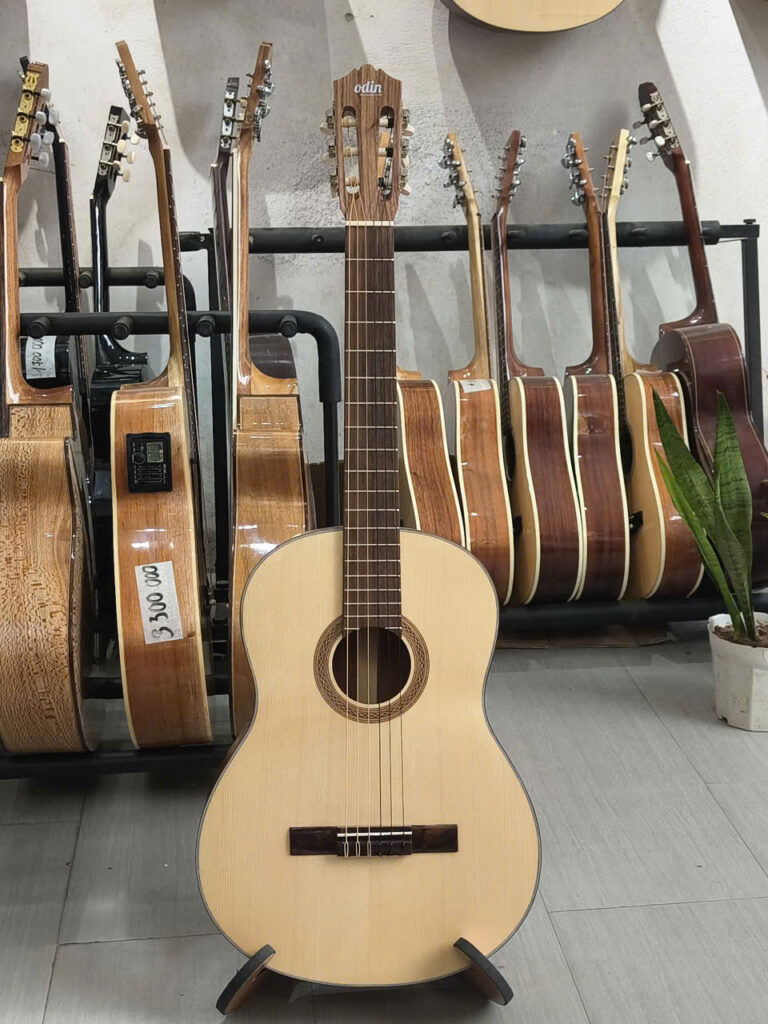
1. What Is a Classical Guitar? Construction, Pros & Cons
A classical guitar is a traditional nylon-string instrument. Its three bass strings (4, 5, and 6) feature a multifilament synthetic core wound in thin silver-plated copper wire, while its three treble strings (1, 2, and 3) are pure clear nylon—delivering a warm, rounded, and gentle acoustic tone.
Key Strengths
Soft nylon strings cut early fingertip soreness by up to 80%. Its wide fretboard (roughly 50–52mm at the nut) gives generous spacing between strings, helping beginners place fingers cleanly without accidentally muting neighboring notes.
Trade-Offs to Note
Overall projection is softer than steel-string acoustics, with a mellow rather than punchy attack. As a result, classical guitars are less suited for loud outdoor campfires or energetic pop/rock strumming.
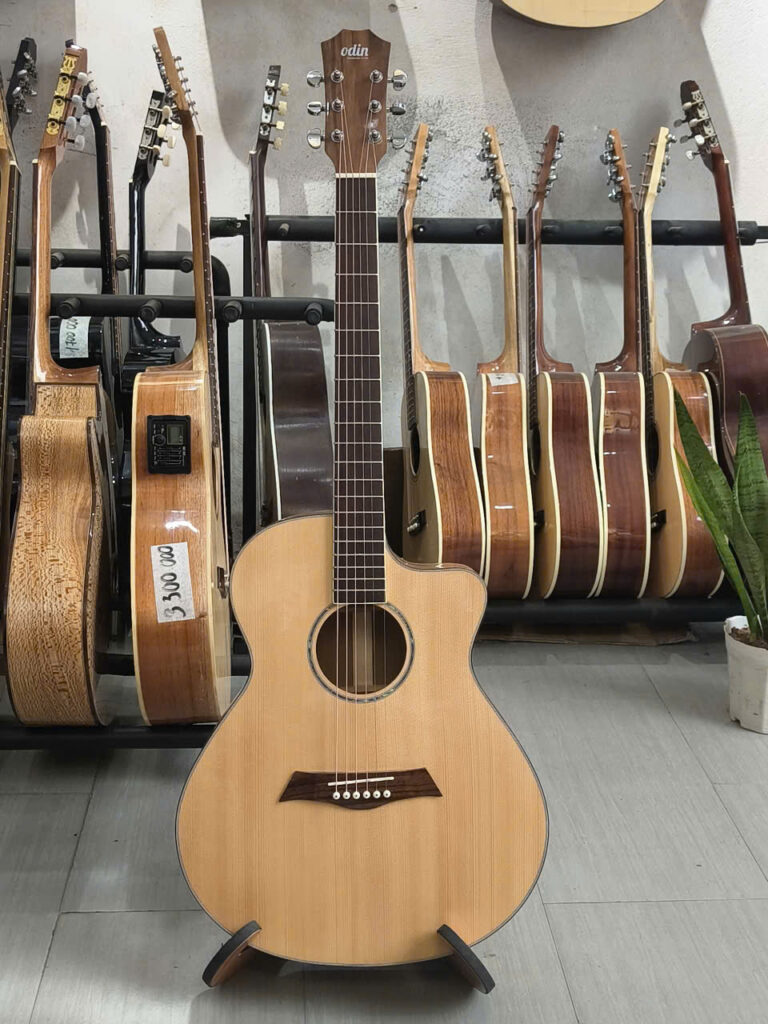
2. What Is an Acoustic Guitar? Construction, Pros & Cons
A modern steel-string acoustic guitar uses metal strings across all six courses. It is the signature instrument heard in acoustic coffeehouses, live bands, campus jam sessions, and sing-along performances.
Key Strengths
Crisp, loud, bright, and energetic projection. Its slimmer neck (about 43mm wide) makes wrapping your hand around the fretboard and gripping modern barre chords far easier for vocal accompaniment.
Trade-Offs to Note
Steel strings carry higher tension, creating noticeable fingertip soreness during the first 2–3 weeks. Without proper low-action setup at the shop, beginners can quickly feel discouraged.
3. Side-by-Side Comparison Table: Classical vs. Acoustic
Compare the core structural and tonal differences between both styles at a glance:
| Feature | Classical Guitar | Acoustic Guitar (Steel-String) |
|---|---|---|
| String Material | Synthetic Nylon (Soft, gentle elasticity) | Phosphor Bronze / Steel (Higher tension, crisp snap) |
| Tonal Character | Warm, sweet, mellow, intimate | Bright, resonant, loud, energetic |
| Finger Comfort | Minimal soreness – easy on tender fingers | Sore for first 2 weeks (requires low-action setup) |
| Neck Dimensions | Wide nut (50–52mm), flat fingerboard | Slimmer nut (43mm), slightly radiused fretboard |
| Tuning Pegs | Slotted open rollers with plastic barrels | Closed die-cast metal tuners, rugged & stable |
| Best Music Genres | Classical, Flamenco, Trinh Cong Son ballads, Solo fingerstyle | Pop, Ballad, Rock, Country, Group sing-alongs |
| Ideal Players | Kids ages 6–12, players who prefer mellow fingerstyle | Teens, university students, adults who love strumming & singing |
4. 5 Golden Criteria to Decide Between Classical and Acoustic
Now that you understand how each guitar works, which one belongs in your hands? Match yourself against these 5 practical criteria:
4.1. Criterion 1: Strumming & Singing vs. Classical Fingerpicking
Your musical goal accounts for 80% of the decision. If you want to sing along loudly with friends at parties, campfires, clubs, or acoustic nights, a steel-string Acoustic Guitar is irreplaceable—its bright metallic shimmer complements vocals naturally.
On the other hand, if your heart leans toward Baroque classical pieces, fiery Spanish Flamenco, relaxing instrumentals, or heartfelt Trinh Cong Son acoustic ballads, a Classical Guitar captures every nuance effortlessly.
4.2. Criterion 2: Finger Soreness & Fretting Pressure
Fear of sore fingers stops more beginners than anything else. Nylon classical strings feel dramatically softer, letting you practice for hours with minimal discomfort. Yet if you truly love the bright sound of a steel-string Acoustic, buying from Goku Music takes away the pain barrier—our technicians calibrate action down to a silky 2.2–2.5mm so fretting feels almost as light as a digital piano key.
4.3. Criterion 3: Volume & Playing Environment
Classical guitars typically feature a traditional non-cutaway body with moderate, polite volume—perfect for apartments, dorm rooms, or quiet evening practice without disturbing neighbors. Acoustic guitars boast larger bodies (Dreadnought or Grand Auditorium shapes) built to project loudly outdoors and fill larger rooms.
4.4. Criterion 4: Advice for Parents Buying for Young Kids
For parents buying a starter instrument for children ages 6 to 12, a Classical Guitar is always our #1 recommendation. Young fingertips are soft and delicate; nylon strings protect their hands and keep practice joyful instead of painful. Once they grow older and build finger strength, transitioning to a steel-string acoustic is seamless.
4.5. Criterion 5: Advice for University Students & Working Adults
For university students and busy professionals seeking a fun way to unwind after classes or work, an Acoustic Guitar offers the highest everyday versatility. Most of our 8-session crash-course guitar accompaniment classes at Goku Music are taught on acoustic guitars, getting students strumming popular hits within their very first month.
Advice from Goku Music Instructors: “Don’t choose just to follow the crowd. The best beginner guitar is the one whose voice makes your heart smile and inspires you to pick it up every single day.”
5. 4 Essential Technical Checks Before Buying Any Beginner Guitar
Whether you settle on a classical or acoustic guitar, always verify these 4 technical essentials to avoid faulty instruments:
- Never put steel strings on a classical guitar: Classical necks lack an internal two-way truss rod, and the glued bridge is only engineered for roughly 35kg of nylon tension. Installing steel strings (60–70kg of pull) will warp the neck or tear the bridge straight off the top.
- Check neck straightness and smooth fret edges: Sight down the neck from headstock to body to confirm zero twist, and run your fingers lightly along both fretboard edges to ensure no sharp fret ends stick out.
- Choose a Solid Wood top whenever possible: Solid-top guitars (such as Odin F0Ac and Odin F1N) mature over time—opening up with warmer, deeper resonance as the wood vibrates (“opening up”).
- Buy from a shop offering warranty & lifetime setup care: Northern Vietnam swings between humid spring drizzle and dry winters, causing wood to expand and contract. A dedicated shop like Goku Music provides ongoing truss rod adjustments and wood care free for life.
6. Frequently Asked Questions (FAQ)
Yes, absolutely! Classical guitars bring an intimate, mellow warmth to pop ballads, Bolero, and acoustic arrangements. The main difference is simply softer overall volume compared to steel-string acoustics.
Very easy! The wider classical neck trains disciplined thumb and finger placement. Moving to a slimmer acoustic neck afterward often feels noticeably faster and more agile.
The sweet spot for beginners is 1,200,000 – 2,500,000 VND. In this bracket (for example, Odin F0Ac Pro or Classic Odin F1N), you get genuine tonewoods, an adjustable truss rod, and comfortable low action built to last.
Goku Music provides a 7-day 1-for-1 return & exchange policy for manufacturing defects or customers wishing to swap or upgrade between Classical and Acoustic models until they find their ideal match.
7. Conclusion & Try Both Instruments Free at Goku Music
Whether you pick a classical or acoustic guitar, what matters most isn’t the price tag—it is finding the companion that matches your musical taste and brings joy to daily practice. Start your musical journey excited, confident, and pain-free on a well-calibrated fretboard!
Visit Goku Music Showroom to Compare Both Guitars in Person Today
Over 200+ authentic Classical and Acoustic guitars are ready to play at Goku Music Cau Giay (open daily 08:30 – 21:30). Our instructors and technicians are happy to let you test sound, measure comfort, and advise 1-on-1 for free!