The E7 chord is a foundational yet expressive shape used everywhere in blues, rock, pop, and acoustic ballads. With an open-string voicing, full resonant sustain, and an ultra-simple two-finger grip, the E7 chord is ideal for anyone picking up a guitar for the first time. Mastering E7 early gives you greater confidence when strumming and connecting chord changes across dozens of songs.
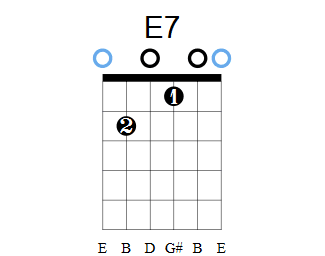
How to play the E7 chord on guitar
1. E7 Chord Diagram
How to play the E7 chord on guitar
2. Easiest Way to Play the E7 Chord
The best part about open E7 is that you only need 2 fingers to fret it cleanly, making it wonderfully beginner-friendly.
Finger Placement:
-
Finger 1 (Index): 3rd string (G), 1st fret
-
Finger 2 (Middle): 5th string (A), 2nd fret
All four remaining strings (6, 4, 2, and 1) ring open, creating a rich, resonant sound.
Key Technique Tips:
-
Keep both fingers arched perpendicular to the fretboard so neighboring open strings are not muted.
-
Press right behind the fret wire (the right edge of the fret space) for crisp, rounded notes without buzz.
-
Pluck each string individually from 6 down to 1 to verify every note rings clearly.
With just a few minutes of practice a day, switching between E7 and essential chords like Am, A7, Em, and D will quickly feel effortless.
3. Why Should Beginners Learn E7 First?
-
Easiest shape in the seventh-chord family
-
Distinctive, soulful color that adds emotion to progressions
-
Pairs smoothly with common chords, especially in the keys of E and A
-
Highly versatile across classical, blues, pop, and modern acoustic music
Thanks to its versatility and ease, mastering the E7 chord unlocks a whole range of expressive song accompaniments.