If you are just starting guitar and experiencing sore fingers while playing, don’t get discouraged! Almost every beginner goes through this stage. This guide explains the root causes and the safest, most effective ways to reduce finger pain when playing guitar. Let’s break down what makes your fingertips hurt and how to fix it right away:
What Causes Finger Pain When Playing Guitar?
1. Action Set Too High
Action is the height of the strings above the fretboard. When action is too high, you must press down much harder to fret cleanly, leading to sore or blistered fingertips. Many out-of-the-box guitars have not been properly set up, causing beginners to quit early from unnecessary pain. If your strings sit noticeably far from the frets—especially on an acoustic guitar—bring it to a reputable repair shop to have the action lowered to standard height. At Goku Music, our technicians calibrate action to suit your hand strength so fretting feels light and effortless without sacrificing tone.
2. Strings That Are Too Heavy or Stiff
Many starter guitars come strung with heavy-gauge or high-tension steel strings that demand extra grip strength just to ring out. Hard, high-tension steel strings quickly irritate tender beginner fingertips. Switching to nylon or extra-light strings makes early practice far gentler. Solution: choose soft, low-tension strings (such as D’Addario EJ15 or Alice AC130). Lighter gauges still produce crisp tone while dramatically reducing finger pain. You can bring your instrument to Goku Music for professional beginner-friendly string replacement.
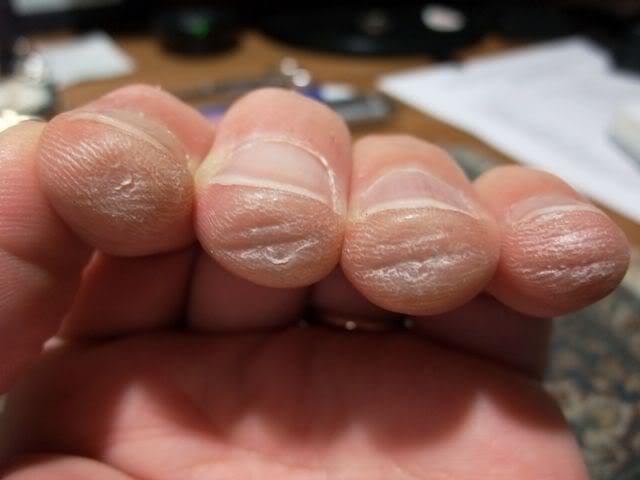
Finger pain caused by stiff strings and high action
3. Improper Fretting Technique
Another frequent mistake is pressing strings with poor posture: fretting with the flat pads of your fingers instead of the tips, gripping the neck awkwardly, or squeezing harder than necessary. That puts strain on your finger joints and slows down chord changes later. Watch proper posture tutorials and follow these quick habits:
-
Keep your wrist relaxed and straight; avoid tensing your shoulders.
-
Press using your fingertips, not the soft middle pads.
-
Apply only enough pressure for a clear note—never death-grip the neck.
-
Practice slowly and cleanly note by note to build calibrated finger strength.
Effective Ways to Reduce Finger Pain on Guitar
Already feeling fingertip soreness? Try these proven methods to ease the discomfort and keep progressing steadily:
1. Lower the Action and Switch to Lighter Strings
The fastest fix is lowering your guitar’s action. When string height is properly balanced, chords require a fraction of the pressure. Bring your guitar to Goku Music – 95B Alley 59 Duong Khue, Mai Dich, Cau Giay, Hanoi (open 08:30 – 21:30) for an action check, setup adjustment, and soft string change so fretting immediately feels lighter.
2. Choose Beginner-Friendly String Gauges
If you are just starting out, pick soft, low-tension strings (either nylon strings on a classical guitar or extra-light acoustic steel strings). Lower tension eases pressure on your fingertips during longer practice sessions.
3. Shorten and Split Up Practice Sessions
Instead of practicing for 1–2 hours straight, break sessions into focused 15–20 minute blocks with short rests in between. Your skin and finger muscles will adapt gradually without swelling or lingering soreness. After finger exercises, gently rub your fingertips together or soak them in warm water for 5 minutes to boost circulation.
Finger exercise video tutorials on our channel: Goku Music Guitar Lessons
Mild finger soreness when learning guitar is completely normal at the beginning—and easy to overcome once your guitar is well set up and your technique is clean. If pain persists despite good posture, your guitar likely has a setup issue such as high action, a bowed neck, or overly heavy strings. Bring it to a trusted shop for inspection, and never let temporary soreness rob you of the joy of making music!